Tour options, inclusions and how to choose
Humantay Lake tour from Cusco: how to choose
What the Humantay Lake day tour from Cusco includes and leaves out, and how it compares with going alone or walking the multi-day Salkantay trek.
See Humantay Lake treks on GetYourGuide ↗Quick answer
The Humantay Lake day tour from Cusco is a guided trip with transport from the city centre, a guide in English or Spanish, breakfast, a buffet lunch, a first aid kit and oxygen. The entrance fee, horses and tips are extra. It suits you if you want one long day and have already spent days at altitude. Booked through GetYourGuide, cancellation is free up to 24 hours before.
Three ways to reach the lake
| Day tour | On your own | Multi-day trek | |
|---|---|---|---|
| Transport | Included | Minibus and taxi | On foot |
| Guide | English or Spanish | None | Your choice |
| Meals | Breakfast and lunch | Your own | Your own |
| Entrance fee | Paid in cash | Paid in Mollepata | Paid in Mollepata |
| Best for | One long day | Flexible plans | Walking to Machu Picchu |
What you're booking
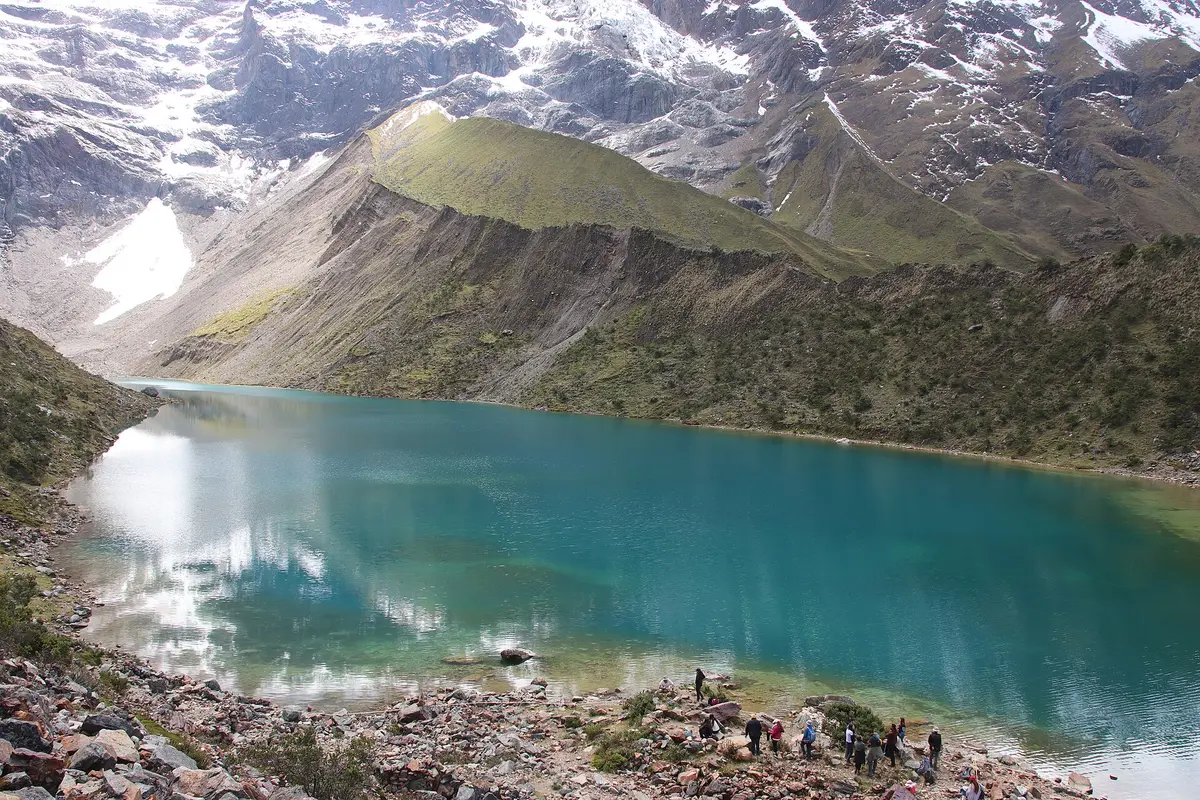
This is a guided day tour, not an entry ticket. The tour takes you from the historic centre of Cusco by van via Mollepata, where breakfast is included, to the trailhead at Soraypampa, and a bilingual guide leads you up to Laguna Humantay. The guide speaks English or Spanish, and a private-group option is available. After your time at the lake you walk back down, have a buffet lunch, and are driven back to the city centre. The day runs to 12 to 13.5 hours, and your confirmation shows the pickup time.
The day in order
The itinerary runs in a fixed order, and the clock times are set for your date. You are collected well before dawn, drive to Mollepata for breakfast, and carry on to Soraypampa, where the hike begins. The trek up to the lake takes about two hours, and there is an optional short climb above the lake for a wider view. Then you walk back down to Soraypampa, which takes about another hour, and a van takes you to Mollepata for a buffet lunch before the long drive back to the city centre. Your confirmation shows the pickup time, and the booking calendar shows the start for each date.
What's included, and what isn't
Most of the day is covered, but not everything. The entrance fee is not included and is paid in cash, in local currency, as are tips. Horses are not included either. Depending on the option you choose, hotel pickup may not be included, in which case you meet your guide at a set meeting point in the city centre. Check which applies for your date before you pay.
- Transport from the city centre to Soraypampa and back
- A bilingual guide, English or Spanish
- Breakfast and buffet lunch, with a vegetarian option
- A first aid kit and an oxygen bottle for emergencies
- Not included: entrance fee, horse hire and tips
Four ways to see the lake
The right choice depends on how much you want to arrange yourself. The day tour is the simplest: transport, guide and two meals are handled for you. Going alone replaces the tour with minibuses and taxis. Other operators sell their own day trips, so compare what each one includes. The multi-day Salkantay trek passes through Soraypampa, and the lake is a side trip from there, so it suits you only if walking toward Machu Picchu is the plan. Wikivoyage describes the usual route as four days in total.
- This day tour: transport, guide and meals handled
- On your own: minibus and taxi, no guide
- Another operator's day trip: compare inclusions
- Multi-day Salkantay trek: the lake is a side trip
Going on your own
Independent visitors take a shared minibus or a taxi from Cusco to Mollepata, then a shared taxi or a regular taxi on to Soraypampa. The shared taxi can be hard to find, so allow for that. The entrance fee is paid in Mollepata. Peru's tourism board gives roughly three and a half hours by bus or car from Cusco to Soraypampa, and about an hour and a half on foot from there to the lake. PeruRail recommends going alone only if you are used to this kind of trip. You gain flexibility and lose the guide, the included meals, and the first aid kit and oxygen the tour carries.
How to compare two tours
Two Humantay tours can look identical and differ in small ways, and no single detail settles it. Before you choose, compare the same handful of details, because they are where the differences usually sit. Check whether entrance fees are included or paid on the day. Check which meals you get, which language the guide speaks, and whether a private group is offered. Then look at whether hotel pickup is included, the cancellation terms, and what the operator does if access to the lake is closed.
- Entrance fees included or paid separately
- Guide language and private-group option
- Meals, first aid kit and oxygen
- Hotel pickup and cancellation terms
Book after you've acclimatised
Plan the date around your arrival, not the other way round. Cusco is at about 3,400 m. Wikivoyage's Salkantay page advises spending at least two to three days acclimatising in Cusco before the trek, and TravelHealthPro lists exertion on arrival as a risk factor for altitude illness. It also says physical fitness does not appear to protect against it. Booked through GetYourGuide, the tour is free to cancel until 24 hours before departure, so you can reserve a date and move it if you feel unwell. The plan only works if you actually leave yourself the days.
Horses, cash and the last stretch
Horses are not part of the tour, and the tour operator does not manage horse rentals. They are rented from local people at Soraypampa and, according to PeruRail, only for the uphill section. Wikivoyage advises agreeing the price, the destination and what is carried before you set off. Only local currency is accepted for entrance fees and extras, so carry cash. A horse spares your legs, not your lungs: the air at the lake is just as thin, so it doesn't replace spending days in Cusco first. The final approach is also a decision to make on the day, once you see how you feel.
Cancellation and payment
Booked through GetYourGuide, the tour can be cancelled free of charge up to 24 hours before departure for a full refund, and you can reserve now and pay later. Mind the cut-off, because it is counted back from the departure time shown for your date. If you book direct with an operator or a Cusco agency instead, their terms apply and may differ, so read them before you pay. Either way, keep your confirmation: it holds your pickup time and details.
Who this isn't for
The tour lists pregnant women, people with mobility impairments, wheelchair users, and people with vertigo, respiratory issues or a low level of fitness as not suitable. Anyone with a heart or lung condition should see a doctor who knows about altitude before booking: TravelHealthPro says anyone with a pre-existing condition should consult a health professional before ascending. And if you can't spare a long day that starts before dawn, a tour from Cusco isn't the right shape for you.
Frequently asked questions
Can I visit Humantay Lake without a tour?
Yes. Independent visitors take a minibus or taxi from Cusco to Mollepata and a taxi or shared taxi on to Soraypampa, then walk to the lake. It needs more planning, and you lose the guide, the included meals and the first aid kit with oxygen. PeruRail recommends going alone only if you're used to this kind of trip.
What does the Humantay Lake day tour include?
Transport from the city centre to Soraypampa and back, a bilingual guide (English or Spanish), breakfast, a buffet lunch with a vegetarian option, a first aid kit and an oxygen bottle. The entrance fee, horse hire and tips are not included. Hotel pickup depends on the option you choose.
Are horses included in the tour?
No. Horses are not part of the tour. Local people at Soraypampa rent them for the uphill section, and the tour operator does not manage the rental. Agree the price and destination before you set off, and pay in cash. Horses don't change the altitude at the lake.
How long is the Humantay Lake tour?
It is a long day of 12 to 13.5 hours, including the drive from Cusco and back, breakfast on the way and lunch after the descent. The walk up to the lake takes about two hours. Your confirmation shows the pickup time.
Can I cancel my Humantay Lake booking?
Booked through GetYourGuide, yes: cancellation is free up to 24 hours before departure, with a full refund. You can also reserve now and pay later. Direct bookings follow the operator's own terms.
Which languages does the guide speak?
English or Spanish; the tour calls its guide bilingual. If you need another language, compare other operators' tours, because guide language is one of the details that differ between them. Ask before you pay, rather than at the trailhead.
Sources